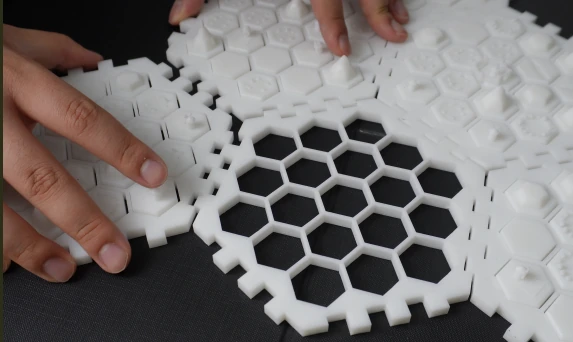
Modular board
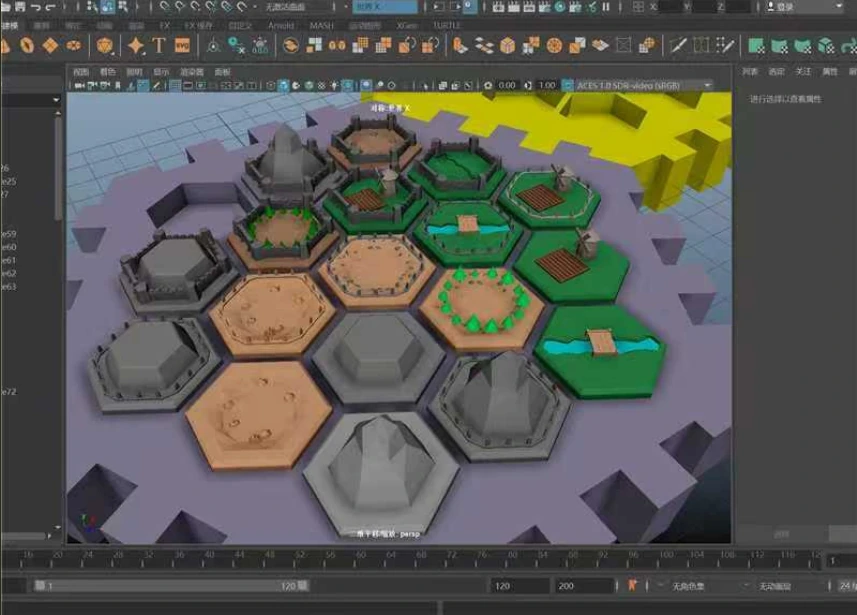
Separate board sections provide a physical basis for arranging the play space. The exact legal starting layouts need a final rule specification.
 DAI YONG
Make the map a strategic object through position, formations and resources.
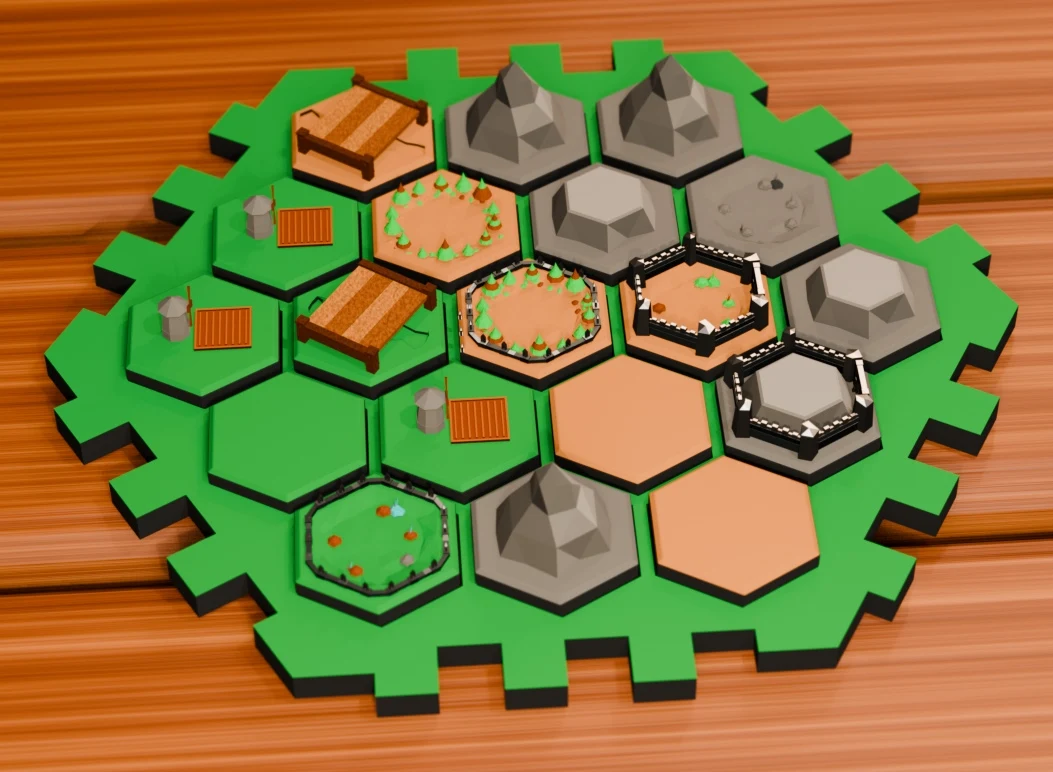
A two-player area-control board game that combines a modular hex map, unit formations, resource management and asymmetric factions. The design centers on controlling space before combat. Physical board pieces, terrain components and pressable unit markers make the system tangible. A guided attack example below explains a limited, traceable part of the draft v4 rules.
Guided rules example / Draft v4
Compare two guided ranged attacks based on draft rules v4, then inspect the physical components. The example uses a disclosed fixed die result and excludes cards, formations, movement and a complete turn. Unresolved rule differences remain outside its scope.
Use the selected archer to preview one of two targets, then confirm a single attack. The die result is fixed at 4 for comparison. No full turn is simulated.
Interactive controls load when this section is reached. If scripts are unavailable, use the images and explanations below.
Separate board sections provide a physical basis for arranging the play space. The exact legal starting layouts need a final rule specification.
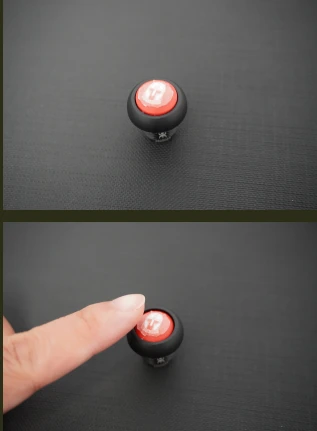
Pressing a marker is proposed as a way to indicate that a unit has finished its turn. The photograph shows the component action, not a tested usability result.
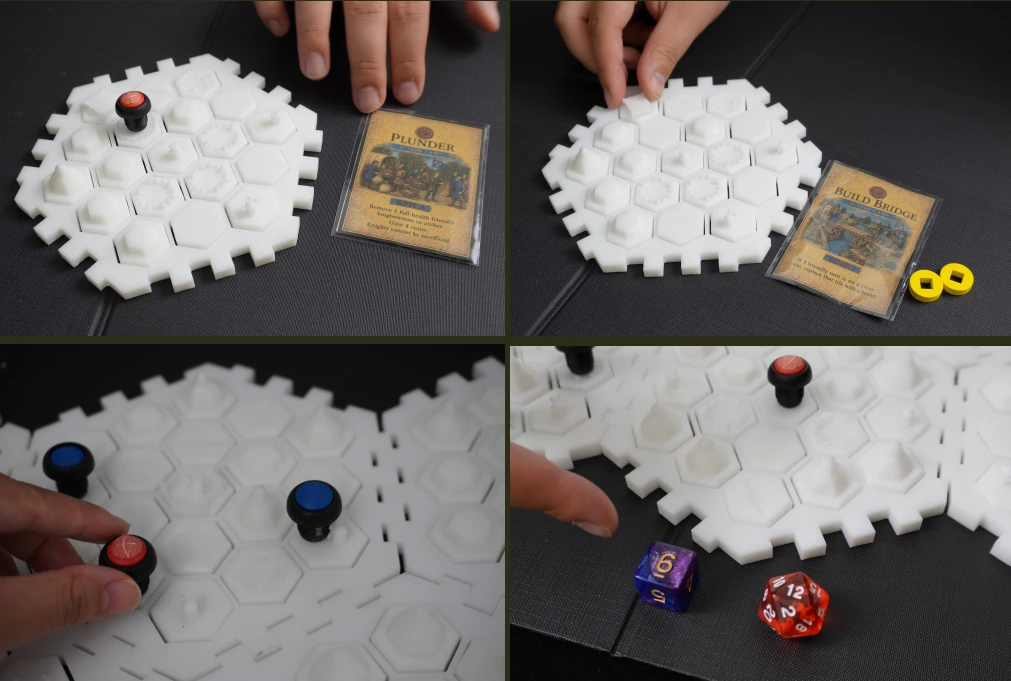
The physical set combines board sections, terrain, units, dice and cards. The photos document fabrication and handling; they do not resolve the differences between the card text and rule tables.
A question, a choice and the evidence behind it.
Terrain, victory locations and adjacent-unit formations are intended to make placement consequential. The concept draws on Go and Chinese Chess for spatial control, and on strategy games for the relationship between resources and initiative. Balance and strategic depth still require documented playtesting.
The physical prototype uses separate board sections and removable terrain pieces. This gives the spatial system a material form and allows layouts to be rearranged. The allowed setup constraints need a consolidated rule version before layouts can be treated as balanced scenarios.
The component description proposes pressing a unit to mark the end of its turn. The photographs show a pressable marker before and during a press. This is evidence of the physical interaction concept; it does not establish its durability or player comprehension.
Draft rules v4 support the guided archer-versus-spearman attack example shown here. A fixed teaching roll makes the difference between open ground and forest directly comparable. A complete playable turn still depends on reconciling card effects, setup constraints and timing cases. The next evidence should connect an agreed rule version to a complete annotated turn and recorded playtest observations.
暂无。A matched before-and-after pair, the reason for the change and the observations behind it will be added together. Current images document the project; they are not presented as measured improvement.
9-page Chinese rule draft. Card effects, setup and timing details still contain unresolved differences; this is not a final consolidated rulebook.
Download PDF暂无。The verified files, version and instructions will appear here when ready.
暂无。A continuous demonstration with a text description is still to be supplied.
Portfolio source pages: 12, 13, 14, 15, 17, 18. Project dates reproduce the portfolio labels; they do not state production duration.